
Concrete is one of the most versatile and durable building materials available, making it a staple in construction projects ranging from foundation slabs to driveways. But achieving a firm, long-lasting concrete surface requires more than just pouring cement and waiting for it to dry. At Johnston Construction, we follow best practices to ensure every concrete job stands the test of time.
In this blog, we’ll explore what you need to know about the process, preparation, and finishing of concrete work, from foundation slabs to driveways.
1. Proper Site Preparation Is Key
Before pouring concrete, the site must be thoroughly prepared:
- Excavation and Grading: The ground should be excavated to the correct depth and graded to ensure proper drainage, preventing water from pooling under or around the concrete.
- Compaction: The soil must be compacted to create a stable base that won’t shift or settle, which could cause cracks to form.
- Sub-base Installation: A layer of crushed stone or gravel is often placed under the concrete to enhance stability and drainage.
Poor preparation is a common cause of concrete failure, so this step is critical.
2. Use the Right Concrete Mix
Not all concrete mixes are created equal. The mix should be selected based on the specific application:
- Foundation Slabs: Require high-strength concrete with low permeability to withstand heavy loads and environmental stresses.
- Driveways: Need a durable mix that can resist weather, abrasion, and vehicle weight.
Our team carefully selects and customizes concrete mixes to match your project’s needs and local climate conditions.
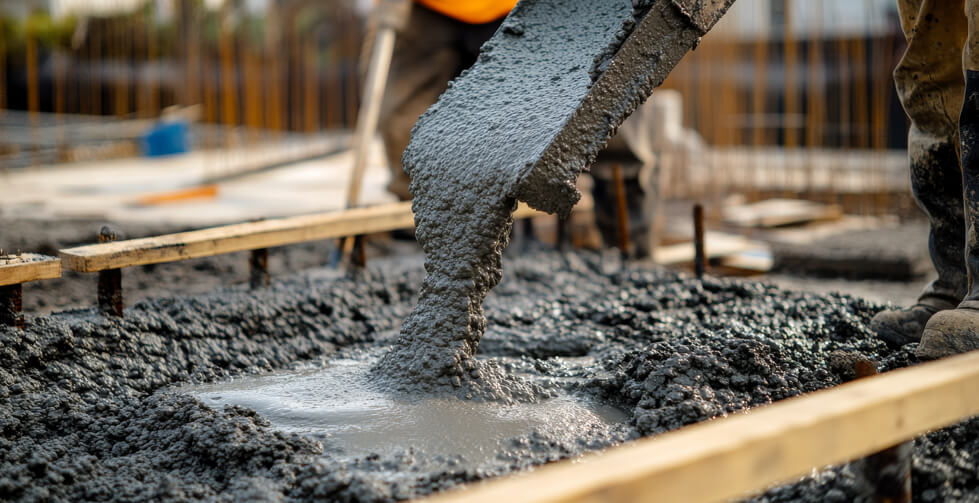
3. Proper Pouring and Placement
When pouring, consider the following:
- Work Quickly: Concrete begins to set soon after mixing, so it must be poured and spread efficiently to avoid delays.
- Avoid Segregation: Ensure the aggregate and cement paste remain evenly mixed during placement.
- Use Forms: Secure forms keep the concrete contained and define its shape, crucial for slabs and driveways.
4. Correct Finishing Techniques
Finishing affects both the appearance and durability of concrete:
- Floating and Troweling: These steps smooth the surface and remove excess water, which helps prevent cracking.
- Control Joints: Saw-cut or formed joints allow the concrete to expand and contract without uncontrolled cracking.
- Texturing: For driveways and walkways, adding texture improves traction and safety.
5. Curing Is Essential for Strength
Curing keeps concrete moist, allowing the chemical process that strengthens it—called hydration—to continue properly.
- Cover the concrete with plastic sheeting or curing blankets.
- Mist or spray water regularly for at least 7 days.
- Avoid heavy loads or stress during curing to prevent damage.
Proper curing can dramatically increase the lifespan of your concrete.
6. Weather Considerations
Extreme temperatures and weather can affect concrete pouring and curing:
- Cold Weather: May require the use of additives or heated blankets to maintain curing temperatures.
- Hot Weather: Calls for quick placement and curing to prevent rapid drying and cracking.
Our team carefully monitors conditions and adjusts methods to ensure high-quality results, regardless of the weather.
Why Choose Johnston Construction for Your Charleston Concrete Needs?
With years of experience in excavation, grading, and concrete work, Johnston Construction handles every step with precision and care. From preparing your site to the final cure, we ensure your new driveway, foundation, or slab is built to last.