
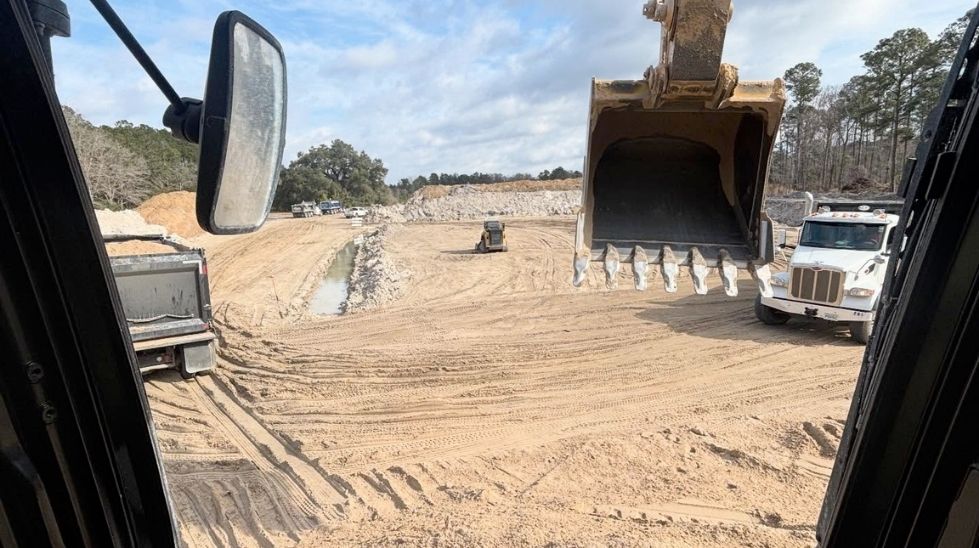
On paper, site preparation in Charleston is a single line in a schedule. In the field, it’s a sequence of decisions that set the tone for everything that comes after construction begins, including concrete, framing, utilities, and long‑term performance.
In the South Carolina Lowcountry, land preparation has its own challenges, such as soft soils, high water tables, drainage concerns, and access issues that are easy to underestimate.
In this blog, the team at Johnston Construction will walk through the major steps from raw ground to a buildable pad, so local builders, developers, and owners know what to expect and what to watch for.
1. Access and Staging
Before any tree comes down or any dirt moves, it is worth asking one question: How will people and equipment get in and out of this construction site day after day?
Key items to consider:
- Identify the best access point for heavy equipment and trucks.
- Establish a construction entrance that will stand up to repeated use.
- Confirm overhead and underground utilities along the route.
- Plan staging for materials, equipment, and spoil piles so work does not block itself.
Good access planning keeps the project moving and reduces damage to surrounding roads and property.
2. Land Clearing and Grubbing
Land clearing is more than just knocking trees down. Done correctly, it’s the kind of site work that sets a foundation for proper grading, cleaner compaction, and fewer surprises later.
Checklist items:
- Remove trees, brush, and vegetation inside the work area.
- Grub and remove stumps and major roots in fill and structure areas.
- Strip and stockpile topsoil separately from structural fill.
- Coordinate with the owner on any trees or features to be preserved.
Keeping topsoil and suitable fill separated from the beginning makes it easier to reuse material intelligently instead of paying to haul everything away.
3. Rough Grading and Cut/Fill Balancing
Once the site is open, the goal is to bring it closer to design elevations without getting ahead of utilities or structures.
Key considerations include:
- Shape the site to approximate design grades while leaving room for fine‑tuning.
- Identify high spots (cuts) and low spots (fills) that can be balanced on site.
- Check drainage patterns so temporary ponding does not create problems.
- Keep haul distances and double‑handling of material to a minimum.
Good rough grading is about moving dirt with a plan, not just pushing it around until it “looks close.”
4. Drainage and Erosion Control
Lowcountry weather can turn a bare site into a mess in a single storm. Erosion control measures and temporary drainage systems are not optional.
Important steps:
- Install perimeter controls where required (silt fence, wattles, etc.).
- Provide stabilized entrances to reduce tracking onto public roads.
- Cut temporary ditches or swales to move water away from structures and access points.
- Maintain soil erosion control throughout the job, not just at the beginning.
Keeping water where it belongs protects neighboring properties, helps inspections go smoothly, and keeps the site workable after heavy rain.
5. Subgrade Evaluation
Before any serious compaction or base material goes down, the existing ground needs to be evaluated.
Things to review:
- Identify soft, organic, or unsuitable local soil conditions in building and pavement areas.
- Remove and replace unsuitable material with appropriate structural fill.
- Address localized soft spots that will compromise slabs, footings, or pavements.
- Work with testing agencies when required to confirm bearing capacity.
Skipping this step often leads to settlement, cracking, or pumping under traffic later.
6. Structural Fill Placement
Where fills are needed, the material and how it is placed matter as much as the amount does.
Checklist:
- Use appropriate fill material for structural areas, not topsoil or debris.
- Place fill in controlled lifts suitable for the equipment and soil type.
- Avoid over‑saturating fill during placement.
- Keep fill free of large organics, trash, and oversized material where not allowed.
A good fill plan supports future slabs, foundations, and pavements instead of working against them.
7. Compaction and Testing
Compaction is where the site starts turning from dirt work into a buildable surface.
Key tasks include:
- Compact each lift to the specified density using appropriate equipment.
- Pay special attention to areas under foundations, slabs, and heavy traffic zones.
- Coordinate with testing agencies for proof‑rolling and density testing where required.
- Address any failed test areas immediately, not after construction continues above them.
Consistent compaction up front can prevent a long list of issues later — like settling, cracking, and water problems among them.
8. Utility Coordination and Excavation
Most construction projects require underground utilities that cross or run through prepared areas.
Checklist:
- Coordinate utility routes with the overall grading plan.
- Excavate trenches to the proper depth and width, with safe slopes or shoring.
- Bed utilities correctly to protect them and avoid future settlement.
- Backfill and compact trenches in lifts to avoid long-term depressions and cracking.
Bringing utilities and grading together reduces conflicts and rework.
9. Final Grading Around Structures and Paved Areas
Final grading is where the site begins to look finished, but it also has a major impact on drainage and long-term performance.
Tasks at this stage include:
- Shape grades to direct water away from structures and toward designed drainage points.
- Blend slopes so walks, driveways, and patios tie in smoothly.
- Provide appropriate fall away from foundations and slabs.
- Prepare areas for topsoil and landscaping without flattening critical drainage paths.
Final grading is where good site prep shows: water goes where it is supposed to, and surfaces feel intentional rather than improvised.
10. Topsoil, Stabilization, and Cleanup
A prepared site still needs to be stabilized to hold up to the weather.
Checklist:
- Place and spread topsoil where lawns and plantings are planned.
- Install seed, sod, or other stabilization where required.
- Remove temporary stockpiles or reshape them as permanent features, if planned.
- Clean up access routes and staging areas.
Stabilization protects the investment in grading and compaction and helps bring the site into its next phase without erosion problems.
Why Working With an Experienced Charleston Land Prep Partner Matters
For many projects, land preparation is where the schedule either gains momentum or falls behind. The right partner:
- Understands local soil and drainage conditions
- Can adjust to site realities without losing sight of the design intent
- Communicates clearly with the builder, owner, and other trades
- Plans access, hauling, and sequencing so work does not fight itself
A solid land prep checklist is a starting point. Experienced execution is what turns that list into a site that is genuinely ready to build on. For help with residential or commercial land preparation in Charleston, SC, reach out to the team at Johnston Construction for a detailed estimate.