
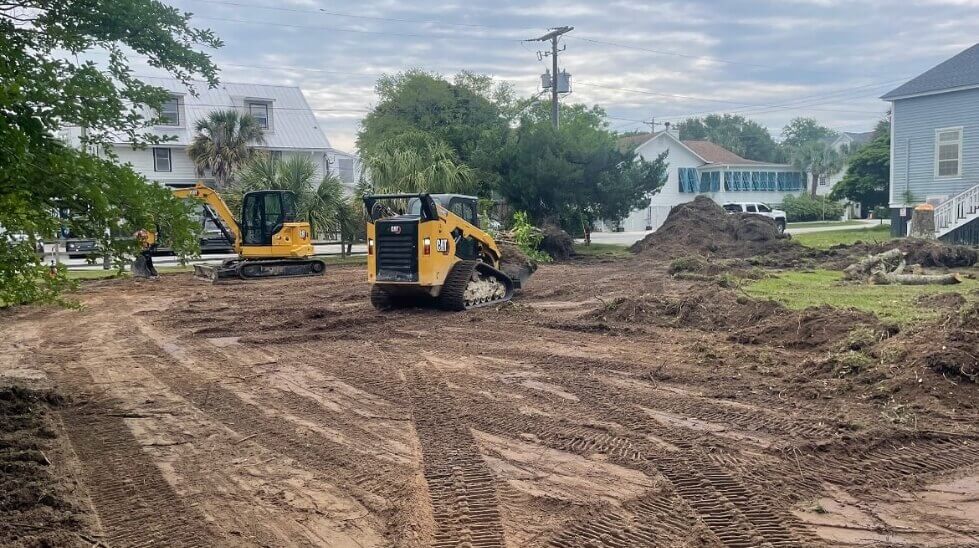
Starting a land development project in South Carolina usually begins with ideas about the finished product — a home, a commercial site, or a multi‑lot development. But before any machine touches the ground, the land grading plan quietly decides how water moves, how your site functions, and how smoothly construction will go.
In this guide, we’ll walk through how to understand a grading plan in plain language so you can ask better questions, spot red flags early, and keep your project moving.
What a Grading Plan Is (and Why It Matters)
A grading plan is the roadmap for how your site will be shaped. It shows where soil will be cut or filled, how water will drain, and how your finished elevations tie into roads, sidewalks, and neighboring properties.
Even if an engineer designs the plan, it still needs to be buildable. That’s where a contractor like Johnston Construction comes in. We translate lines and numbers into a site that drains properly, passes inspection, and supports everything being built on top of it.
Key Elements You’ll See on a Grading Plan
You don’t need to understand every symbol, but a few core elements are worth recognizing:
- Contour lines: These are the curved lines that show elevation across the site. Lines close together mean steeper slopes; lines farther apart mean gentler grades. You want to pay attention to where these lines tighten near buildings, drives, and property lines—it’s often where water issues show up later.
- Spot elevations: These are specific elevation points (often numbers next to small “x” marks) at key locations like corners of buildings, driveways, sidewalks, and pads. They tell you how high or low those exact points will be once grading is complete.
- Arrows and flow lines: These indicate the direction water is designed to flow. They might follow swales, ditches, or pavement. If arrows seem to send water toward buildings, neighboring properties, or areas with limited drainage, that’s a signal to ask more questions before work starts.
- Cut and fill areas: Many plans will show where soil needs to be removed (cut) or added (fill) to reach the desired grades. Large fill areas may require extra compaction and testing to ensure long‑term stability under structures and pavements.
- Slopes and ratios: You may see slopes written as ratios (e.g., 2:1, 3:1) or percentages. These help define how steep a bank, yard, or drainage area will be. Steeper slopes may require more attention to erosion control, access, and maintenance.
How to Tell Where Water Is Going
One of the most practical skills as a non‑engineer is reading how water is intended to move across the site.
A few things to look for:
- Water should move away from buildings, not toward them. Yard and hardscape grades typically fall away from structures for a set distance.
- Low points—such as drainage inlets, swales, or basins—should be clearly defined and connected, not isolated.
- Pay attention to how your site ties into neighboring properties and roads. You don’t want to push water problems onto someone else or inherit theirs.
If the flow patterns on the plan don’t match how the site behaves after a heavy rain, or if they’re hard to follow on paper, that’s a good time to bring in a grading contractor who can reconcile the design with real‑world conditions.
Questions to Ask Before Approving a Grading Plan
You don’t have to redline the plan yourself, but you should feel comfortable asking direct questions, such as:
- Are there any areas where water is likely to pond after a storm?
- How is water being handled near building entrances, garages, or loading areas?
- What happens at property lines—are we receiving water, sending it away, or both?
- Are there slopes that will be difficult to maintain, mow, or access with equipment?
- Will this grading plan require significant import or export of soil, and how does that affect cost?
A Lowcountry contractor who regularly builds from grading plans can flag where the design may be technically correct but difficult or expensive to construct, and suggest practical adjustments.
Common Issues We See With Grading Plans
On paper, many grading plans look clean. In the field, certain issues show up again and again:
- Slopes that are too flat for proper drainage or too steep for maintenance
- Insufficient thought given to how trucks, equipment, and trades will actually access the site
- Low spots near structures, driveways, or walkways that become problem areas after the first heavy rain
- Plans that don’t fully account for existing soil conditions, requiring unexpected undercutting or additional fill
Catching these early, ideally before the first bucket drops, can save significant time and money.
Why Your Charleston Grading Contractor’s Input Matters
Engineers design with codes, calculations, and approvals in mind. Contractors build with equipment, soil behavior, and real‑world logistics in mind. The most successful projects respect both perspectives.
At Johnston Construction, we review grading plans not just for what’s drawn, but for how it will actually perform once built:
- Is the site accessible for construction and long‑term use?
- Will the chosen grades support proper drainage across seasons?
- Are there places where small changes now will prevent future maintenance headaches?
By letting us evaluate your grading plan before construction, you get another layer of protection against surprises in the field.
Choose Johnston Construction for Land Grading in Charleston That Works on Paper and On Site
You don’t need to be an engineer to make good decisions about your site, but you do need a grading partner who can translate technical plans into a finished product that drains, functions, and supports your long‑term goals.
Johnston Construction provides land grading services that align engineering intent with constructability, local conditions, and your budget. We help property owners, builders, and developers in the Charleston area move confidently from plans to a site that’s truly ready to build on.
If you have a grading plan in hand, or you’re about to request one, bring us into the conversation early. We’ll review the details, flag potential issues, and shape a grading approach that supports your project from the ground up.
Get in touch to talk through your grading plans and next steps for your Charleston‑area site.